As a premium WordPress agency UK, we've helped businesses expand into new markets by building multilingual websites that are fast, scalable, and easy to manage. Over the years, we've delivered multilingual solutions for corporate websites, manufacturers, service providers, and content-heavy platforms. While creating content in multiple languages sounds straightforward, the reality is that website localisation involves far more than translating text. It means preserving your brand voice, maintaining SEO, keeping terminology consistent, and ensuring every language version stays aligned as your website evolves.
Like many agencies, we started with established tools. WPML became our preferred choice because it provides a solid multilingual foundation for WordPress. For translation quality, we integrated DeepL, which consistently produced more natural results than many alternatives, especially for technical and business content.
At first, our workflow looked simple.
Editors would publish content in English, send it for translation, review the translated pages, and publish them.
Simple enough.
But after working on several multilingual projects, we noticed something interesting. Nobody was struggling with translation itself. They were struggling with everything around it. That's when we realised we weren't dealing with a translation problem anymore, we were dealing with a workflow problem.
WPML Solves a Lot but Every Business Works Differently
Before going any further, it's worth saying this clearly.
WPML is one of the best multilingual plugins available for WordPress. It solves an incredibly complex problem and has been the backbone of many of our multilingual projects.
It handles language relationships, translated posts, taxonomies, menus, URLs, language switchers, and all the technical pieces that make multilingual WordPress websites possible.
We had no intention of replacing it. Instead, we wanted to build on top of it. Every client had slightly different requirements. One wanted translations published immediately. Another wanted every translated page saved as a draft until their marketing team reviewed it. Some wanted only Pages translated. Others wanted Products, Case Studies, FAQs, Technical Documents, and custom post types translated automatically whenever English content changed. These weren't limitations of WPML, they were business workflows that needed additional automation.
That's where our plugin began.
Why We Chose DeepLWhy We Chose DeepL
We experimented with several machine translation providers before settling on DeepL.
The difference became obvious when translating technical documentation and industry-specific content.
Instead of producing literal translations, DeepL generally understood the context better, resulting in content that required far less manual editing. Of course, no machine translation is perfect. There will always be situations where human review is essential. But if automation can produce an accurate first draft, editors spend far less time rewriting content and far more time refining it. Calling the DeepL API wasn't the difficult part. Building a reliable workflow around it was.
Translation Is Only One Part of Website Localisation
One thing we've learned while working on multilingual website development projects is that translation and website localisation are often treated as the same thing. They're not.
Translation converts text from one language into another. Website localisation adapts the entire user experience for a specific audience.
That includes:
- Local terminology
- Product names
- Brand messaging
- SEO metadata
- URL structures
- Images
- Dates and time formats
- Measurement units
- Currency formats
- Cultural differences
For example, a page translated into Italian may be grammatically correct, but that doesn't necessarily mean it feels natural to an Italian audience.
Localisation ensures the website feels as though it was originally created for that market.
That's the approach we wanted our plugin to support.
Building Around Real Client Projects
Instead of writing a long specification document, we built the plugin around real client feedback.
Every time someone asked,
"Can translations stay as drafts until marketing approves them?"
or
"Can we stop this product name from being translated?"
or
"Can the plugin automatically translate new content after publishing?"
we added it to our roadmap.
Over time, the plugin evolved from a simple automation tool into a complete translation workflow.
Some of the features that naturally emerged included:
- Automatic translation after publishing English content
- Translation queue management
- Batch processing
- Translation logs
- Glossary synchronisation
- Draft or automatic publishing options
- Support for custom post types
- Background processing for large websites
None of these ideas came from brainstorming sessions.
They came directly from solving problems our clients experienced every day.
Connecting WPML and DeepL Was Only the BeginningDeepL Was Only the Beginning
On paper, integrating WPML with DeepL sounds straightforward.
In reality, it introduced dozens of edge cases.
For example:
- What happens when an editor updates only one paragraph?
- Should the entire page be translated again?
- What if DeepL is temporarily unavailable?
- How do we retry failed translations?
- How do we avoid translating navigation labels?
- How do we preserve HTML attributes?
- What about SVG icons?
- How do we avoid translating Gutenberg block settings?
These questions became the real project.
One issue that took more time than expected involved SVG content.
Some Gutenberg blocks contained inline SVG icons. During translation, certain attributes were being modified, causing icons to break on the frontend.
The solution wasn't to improve translation, it was teaching the plugin exactly what should never be translated.
That turned out to be just as important as translating the visible content.
Gutenberg Was More Challenging Than We Expected
People often think a WordPress page is just text.
Modern WordPress simply doesn't work that way.
A single page may contain:
- Nested Gutenberg blocks
- Custom blocks
- Dynamic content
- ACF fields
- HTML attributes
- JSON configuration
- Shortcodes
- Inline SVG graphics
Some parts should be translated.
Others absolutely shouldn't.
A significant amount of development time went into recursively processing Gutenberg blocks while preserving their structure.
Without that, translated pages could easily become broken.
It's one of those technical challenges users never see, but they definitely notice when it isn't handled correctly.
Building a Queue Instead of Waiting for Timeouts
Our first version worked perfectly until someone tried translating hundreds of pages at once.
That's when reality hit.
- Servers timed out.
- Memory limits were reached.
- API requests failed.
Editors weren't sure whether translations were still running or had stopped completely. Instead of trying to translate everything in one request, we introduced a queue system. Every translation became a background job. The plugin processes jobs in manageable batches while editors continue working normally. For large multilingual websites, this completely changed the experience.
Instead of wondering whether something had failed, editors could see exactly what was happening.
- Pending.
- Processing.
- Completed.
- Failed.
If necessary, failed translations could simply be retried instead of restarting everything from scratch.
Why Glossaries Became One of Our Favourite Features
Machine translation is impressive. But it doesn't know your business. It doesn't know that your product name should remain unchanged. It doesn't know your marketing slogan is trademarked. It doesn't know your preferred technical terminology. That's why glossary management became one of the most valuable parts of our plugin. Editors can upload approved terminology, manage it within WordPress, and synchronise it with DeepL. Whenever content is translated, those glossary terms are respected automatically.
For companies with specialised terminology, this dramatically improves website localisation by keeping language consistent across hundreds or even thousands of pages.
Translation Logs Save More Time Than You Think
Automation only works when you trust it.
One of the earliest requests we received was surprisingly simple.
"Can we see what's happening?"
That question led us to build detailed translation logs.
Editors can track:
- Translation progress
- Completed jobs
- Failed requests
- Processing history
- Retry attempts
Instead of checking server logs or guessing whether something worked, everything is visible from within WordPress.
Sometimes the best feature isn't automation.
It's transparency.
SEO Is Part of the Translation Process
One lesson we've learned through multilingual website development is that translating page content alone isn't enough.
Search engines also need translated:
- SEO titles
- Meta descriptions
- Open Graph content
- Slugs
- Schema markup
- Image alt text
Ignoring these elements often leads to inconsistent search visibility across different languages.
Our goal has always been to support a complete localisation workflow, not simply page translation.
Automation Shouldn't Remove Human Control
One concern clients often have is losing editorial control. We felt exactly the opposite. Automation should remove repetitive work, not decision making. That's why our plugin allows businesses to choose how translations are handled. Some organisations publish translations immediately. Others prefer drafts for review. Some translate only selected post types. Others automate everything. Every organisation works differently. The software should adapt to those workflows rather than forcing everyone into the same process.
More Than a Translation Plugin
Looking back, the plugin isn't really about translation anymore. It's about making multilingual website development easier to manage.
Today it helps businesses:
- Automate repetitive tasks
- Keep terminology consistent
- Reduce manual translation work
- Track translation progress
- Improve website localisation
- Scale multilingual websites without adding administrative overhead
Why Custom Development Still Matters
There are thousands of excellent WordPress plugins available. We use many of them ourselves. But every now and then, a business grows beyond what off-the-shelf software can comfortably handle. That's where custom development delivers real value. As a WordPress agency, we don't begin projects by asking,
"Which plugin should we install?"
We begin by asking,
"What's slowing your team down?"
Sometimes the answer is automation. Sometimes it's integration. Sometimes it's building something entirely new.
Our translation plugin exists because we kept encountering the same workflow challenges across multiple client projects and decided to solve them once instead of solving them repeatedly.
Building the Plugin Was Only Half the Job
Software is never truly finished.
- WordPress evolves.
- WPML receives updates.
- DeepL introduces new API capabilities.
- PHP versions change.
- New Gutenberg blocks appear.
Every update has the potential to affect custom functionality. That's why every solution we build is supported through our managed web service. Our work doesn't end when a plugin is launched.
We continue maintaining compatibility, monitoring performance, improving workflows, fixing issues, and introducing new features as our clients' needs evolve.
Reliable software isn't something you build once. It's something you continuously improve.
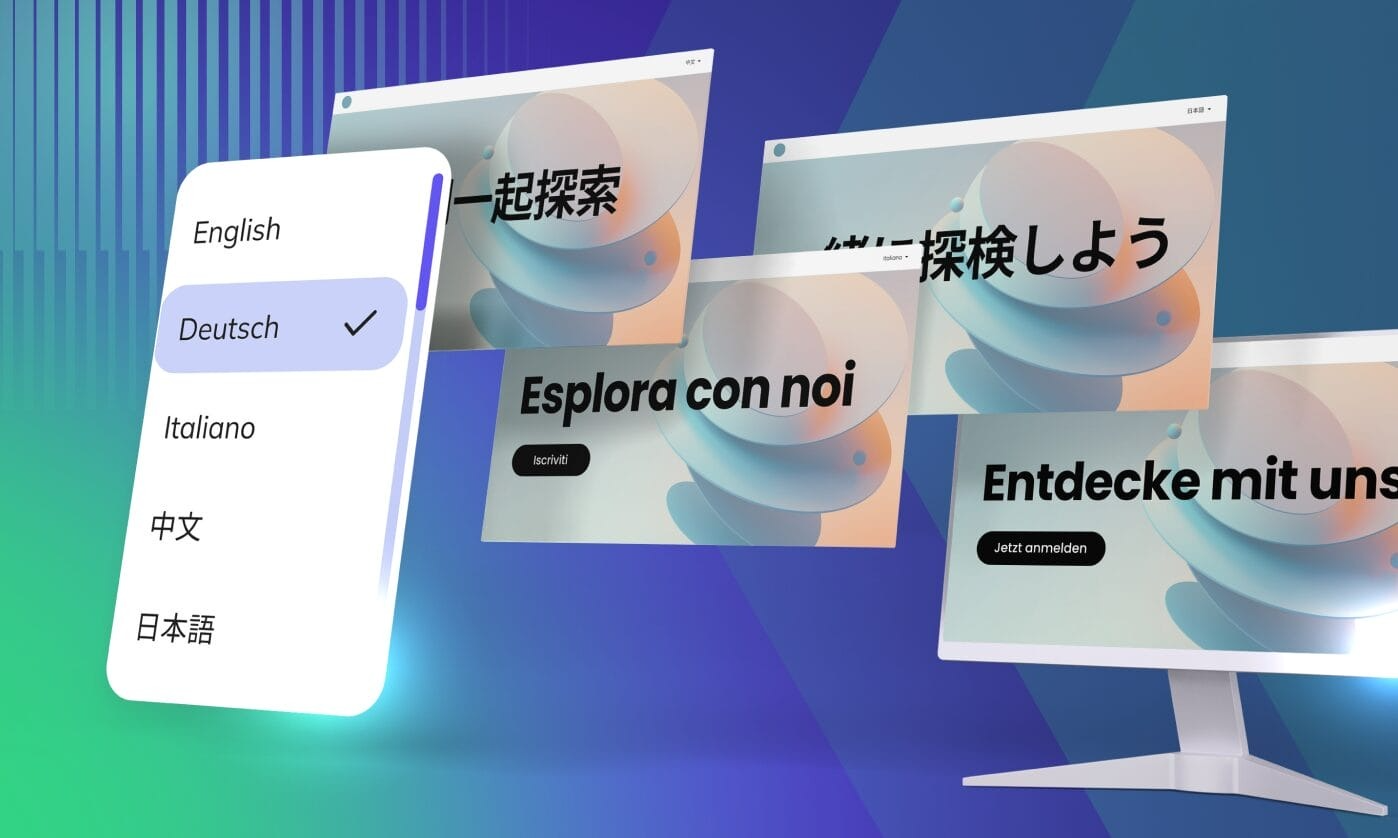
Final Thoughts on Website Localisation
Looking back, this project taught us something surprisingly simple. The biggest productivity gains didn't come from translating content faster. They came from removing unnecessary steps from the entire workflow.
By combining WPML's multilingual capabilities with DeepL's translation quality and adding automation where it genuinely helps, we've created a solution that supports the entire website localisation process, not just translation.
As a WordPress agency UK, we believe the best software comes from solving real problems.
This plugin wasn't created because we wanted another product in our portfolio. It was created because we were tired of solving the same problem manually.
If you're managing multilingual websites, expanding into international markets, or looking to streamline your multilingual website development workflow, investing in the right tools and processes can save hundreds of hours while delivering a better experience for both your team and your customers.
And sometimes, the best software isn't the one with the longest feature list. It's the one that quietly removes hours of repetitive work every single week.